Canal Lock, Marsden — Right Brogue, Balanced on the Lock Gate
I'd been meaning to walk the canal at Marsden for a while. There's a stretch past the tunnel entrance where the towpath narrows and the locks come closer together, and I'd always thought it looked like the sort of place you might find something. I don't plan these things exactly — I just note them down and wait for the right morning. Today were the right morning. Mild, overcast, the sort of April day where it could go either way but you pack for the worse option.
Drove over from home. Parked near the station, which is free on a Sunday if you're early enough. Walked along the canal heading west. The water were very still — barely a ripple. There were a moorhen near the first bridge, moving about in that way they do where they look like they're in a hurry but they're not actually going anywhere. I noted it but didn't stop.
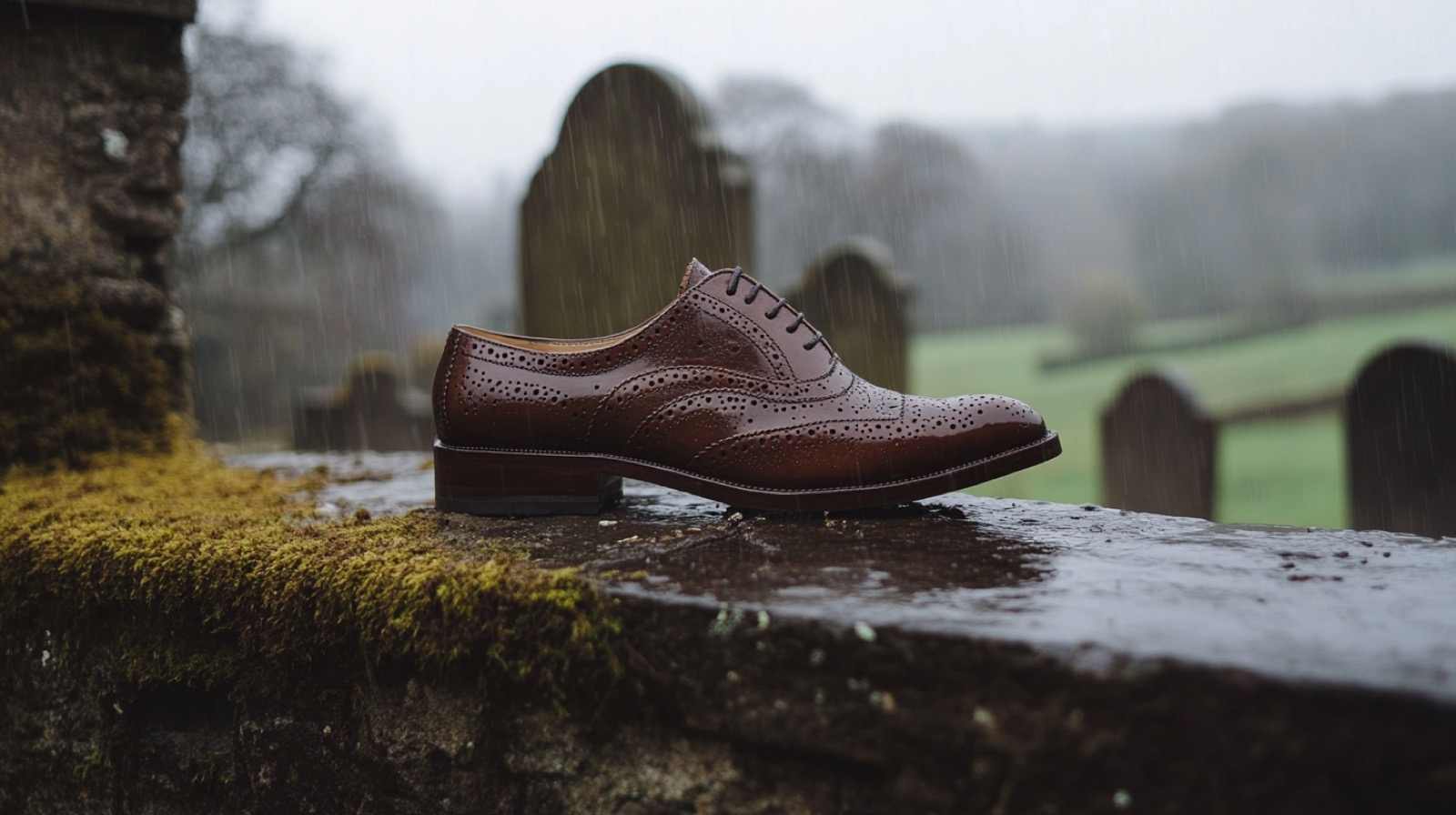
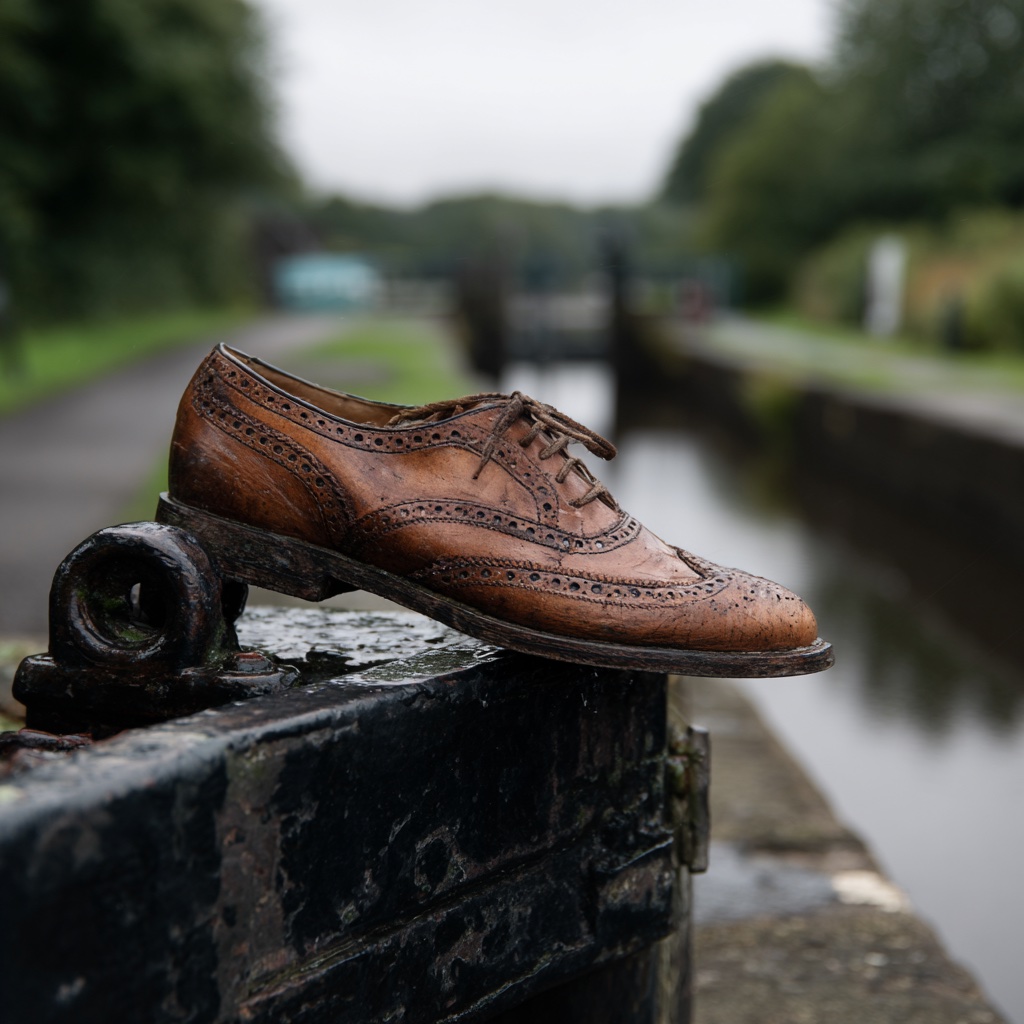
About fifteen minutes in, at the second lock below the tunnel, I saw it. Right foot. Brogue. Brown leather — a warm brown, not dark, with full broguing across the toe cap and quarter panels. Five eyelets, laces present, tied in a single knot. Size nine. And it were balanced on the lock gate mechanism. Not on the ground near the lock. Not in the water. On the mechanism itself — the iron beam that swings to open the gate. Someone had placed it there, carefully, with the heel against the upright and the toe pointing out over the water.
I stood and looked at it for a good while before I did anything. The placement were what got me. I've seen careful placement before — the Honley brogue last week, the Aspley Birkenstock — but this were different. This were deliberate in a way that suggested the person who put it there had thought about it. They'd chosen the spot. The lock gate is not an easy place to balance a shoe and yet there it were, steady as anything, like it had always been there. The iron were black and wet with dew and the brown of the shoe stood out against it. I noted the contrast.
I don't often feel like someone else understands what I do. I don't mean that in a sad way — I've got Our Linda, and Barry sends his photographs, and the man from work who told me about Honley — but the actual act of placing a shoe somewhere with care, with thought about how it sits and what it looks like against its surroundings, that's not something I've come across before. Whoever left this shoe on the lock gate understood something. I don't know what exactly. But they understood it.
Took thirteen photographs. Ten came out. The light were flat, which you'd think would be a problem, but it suited the scene — the grey sky, the dark iron, the brown shoe, the still water below. Some of the better photographs I've taken, I think. I took three from the towpath side and then walked around to the other bank to get it from across the canal. You could see it clearly from both sides. That felt important somehow.
I had my sandwiches on a bench about twenty yards back from the lock. Our Linda had done ham and piccalilli on thick white bread, wrapped in foil. She doesn't always do foil — usually it's greaseproof — but she said the piccalilli can seep through greaseproof if you're not careful, and she's right about that. I asked her once why she doesn't just use less piccalilli and she looked at me as though I'd suggested something unreasonable. Fair enough. Flask of tea, milk added at home. And a Club biscuit — orange, which is the correct flavour. I ate it after the sandwiches, on the bench, watching the lock gate. The shoe hadn't moved. I were pleased about that.
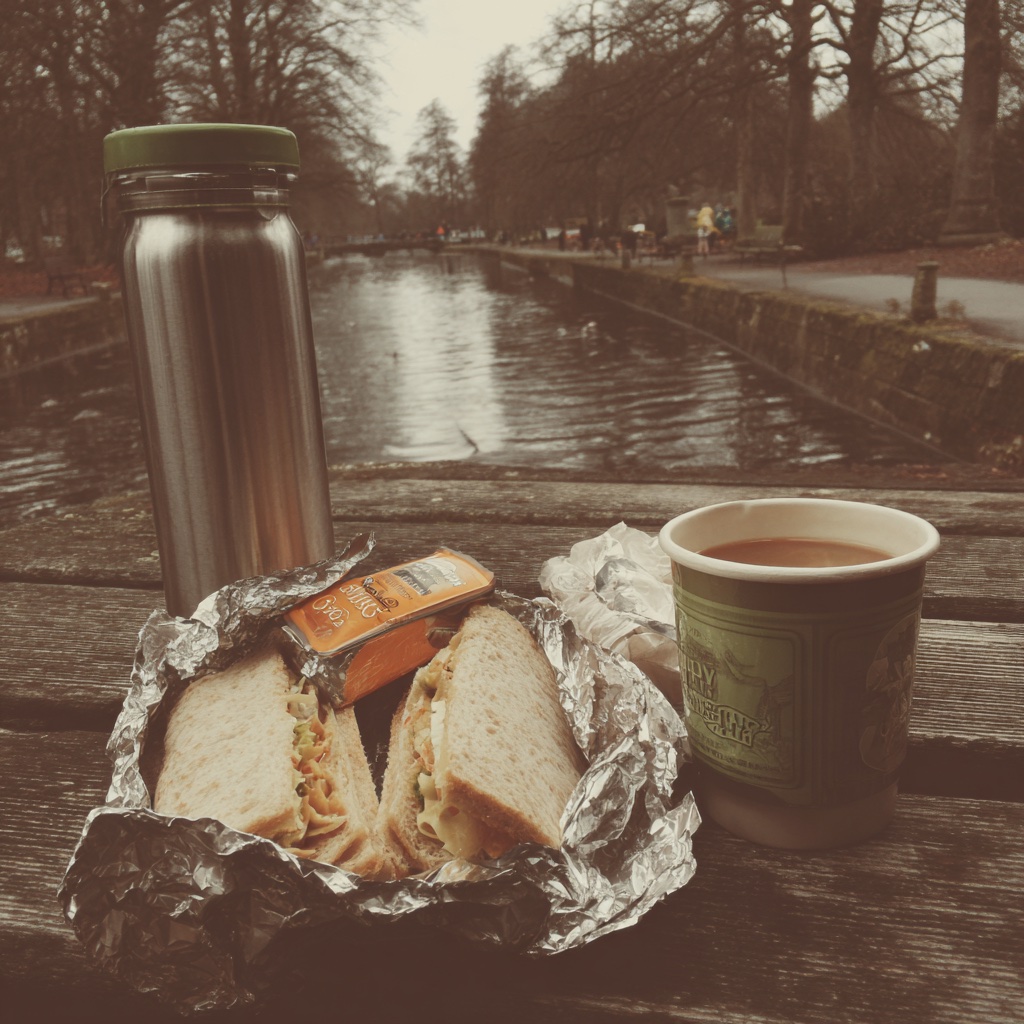
Provisions. 12:14pm. Ham and piccalilli. The foil were Our Linda's call. She were right about the piccalilli.
While I were sat there, a narrowboat came through. I heard the engine before I saw it — a low thudding from the tunnel direction. It came round the bend slowly, as they do, and the woman at the tiller waved. I waved back. I watched the boat approach the lock and I realised what were about to happen. The water would move. The gate would shift. The shoe would go.
The boat pulled up and a man got off the front and started working the lock. I watched him wind the paddle gear. The sluice opened. Water started moving — not fast, but steady, and the gate began to take the pressure. The iron beam shifted. The shoe rocked. I stood up from the bench. The shoe rocked again. A small wave from the sluice came through and lapped against the gate and the shoe tilted — tilted properly, maybe thirty degrees — and I thought, that's it, it's going in.
It didn't. It settled back. The wave passed. The gate steadied. The shoe were exactly where it had been, balanced on the wet iron, as if nothing had happened. The man finished working the lock and got back on the boat and they went through. The woman at the tiller waved again. I waved back. I don't think either of them noticed the shoe. That's alright. Not everyone does.
I thought about whether I should have moved it. Protected it. Picked it up and put it somewhere safer before the boat came through. I decided no. You can't interfere. That's not what this is. The shoe were placed there by someone and it's not my job to second-guess where they put it. If it had gone in the water I'd have noted it — I'd have been sorry about it — but I wouldn't have fished it out. That would have been overstepping. I document. I don't intervene. I've always been clear about that.
Sat for another ten minutes after the boat had gone. The canal settled back to stillness. The drizzle started around midday, light, the sort that doesn't really commit to anything. I packed up my foil and my flask and had one last look at the shoe from the towpath. It were steady on the gate. Brown against black. Someone had put it there with care and it had survived.
Walked back along the canal to the car. Saw the moorhen again, still at it. Barry texted on the way home asking if I'd been out. I said aye, Marsden, a good one. He asked what type. I said brogue. He said "crackin'" and sent a photograph of a trainer he'd seen in Dewsbury which were blurred but showed promise. I told him the framing were improving. It is.
Aye. A special one, this. Someone understood. I don't know who. But they understood.